

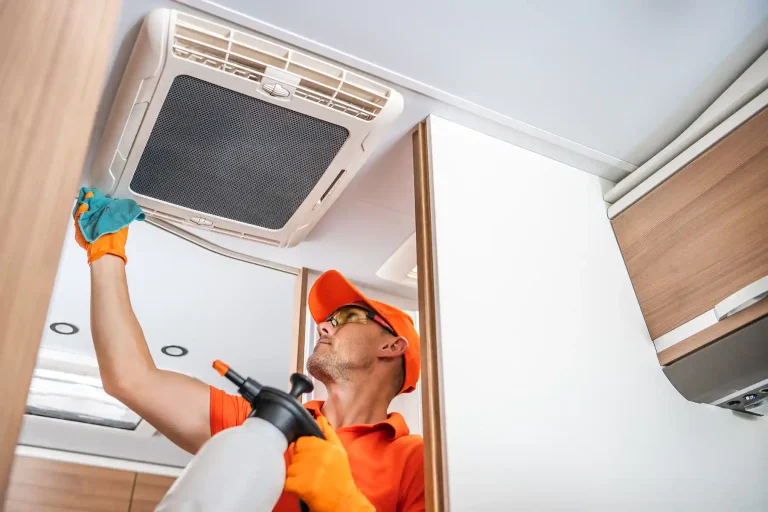
Nothing ruins a summer RV trip faster than stepping inside your rig and realizing your RV air conditioner is not cooling the way it should.
During warm months near St. Louis, RV air conditioners work hard to keep interiors comfortable. When an RV air conditioner is not cooling properly, it can quickly turn a relaxing trip into a frustrating experience.
Fortunately, many RV AC problems are caused by simple issues that can be diagnosed and fixed without major repairs. In this guide, we’ll cover the most common reasons an RV air conditioner is not cooling and what you can do to get it working again.
How RV Air Conditioners Work
RV air conditioners function similarly to residential units, but they are designed to operate in compact spaces and under limited electrical capacity.
Most RV AC systems include:
- A rooftop air conditioning unit
- A compressor and condenser coil
- An evaporator coil
- An internal air distribution system
- A thermostat control
When working correctly, the unit pulls warm air from inside the RV, cools it through the refrigeration cycle, and then circulates cooled air back through the vents.
Because RV units operate under strict electrical limits—often 30 amp or 50 amp service—even small problems can affect performance.
Common Signs Your RV Air Conditioner Is Not Cooling
Before troubleshooting, look for the symptoms that indicate a cooling issue.
Typical signs include:
- Warm air blowing from vents
- AC running constantly without lowering temperature
- Weak airflow
- Strange noises from the rooftop unit
- Unit turning on and off frequently
These signs usually point to airflow problems, electrical issues, or maintenance needs.
Dirty Air Filters
One of the most common and easiest problems to fix is a dirty air filter.
Why Filters Matter
Air filters trap dust, debris, and pollen before air circulates through the RV. Over time, these filters can become clogged and restrict airflow.
Restricted airflow makes the AC unit work harder while producing less cooling.
How to Fix It
- Turn off the air conditioner.
- Remove the interior vent cover.
- Take out the air filter.
- Wash it with mild soap and water or replace it if disposable.
- Allow it to dry completely before reinstalling.
Cleaning filters regularly can dramatically improve cooling performance.
Low Airflow from Blocked Vents
Another common cause of poor cooling is blocked or closed vents.
Check All Air Vents
Ensure that:
- Interior vents are fully open
- Furniture or bedding is not blocking airflow
- Ceiling vents are clean and unobstructed
Proper air circulation helps distribute cool air evenly throughout the RV.
Frozen Evaporator Coils
If your AC is running but blowing warm or weak air, the evaporator coil may be frozen.
Why Coils Freeze
This usually happens due to:
- Restricted airflow
- Running the AC in cooler outdoor temperatures
- Low refrigerant levels
- Dirty coils
How to Fix It
Turn off the air conditioner and allow it to thaw completely. This may take several hours.
Once thawed, check the air filters and airflow to prevent the issue from returning.
Power Supply Issues
RV air conditioners require a stable electrical supply.
If voltage drops too low, the compressor may struggle to run effectively.
Signs of Electrical Problems
- AC starts but shuts off quickly
- Lights dim when the AC starts
- AC struggles during hot afternoons
These problems can occur at busy RV parks when many rigs draw power simultaneously.
Using a surge protector or electrical management system helps monitor voltage and protect your RV’s electrical components.
Dirty Rooftop Condenser Coils
Over time, dust, leaves, and debris can accumulate on the rooftop condenser coil.
This buildup prevents heat from properly dissipating and reduces cooling efficiency.
How to Clean Condenser Coils
- Turn off power to the RV.
- Remove the rooftop AC cover.
- Gently clean debris with compressed air or a soft brush.
- Avoid bending delicate fins.
Routine cleaning improves cooling performance and extends the life of the unit.
Thermostat Problems
Sometimes the air conditioner is working properly, but the thermostat is not communicating correctly.
Check Thermostat Settings
Make sure:
- The thermostat is set to cooling mode
- The temperature is set below the current indoor temperature
- Batteries (if applicable) are fresh
In some cases, resetting the thermostat can resolve communication issues.
RV Size vs AC Capacity
RV air conditioners have limited cooling capacity compared to residential systems.
If your RV is large or poorly insulated, the AC may struggle to keep up in extreme heat.
Typical RV air conditioner sizes include:
- 13,500 BTU units
- 15,000 BTU units
Large RVs sometimes require two rooftop units to maintain comfortable temperatures during hot Missouri summers.
Tips for Improving RV Cooling Efficiency
Even when your AC is functioning properly, a few simple strategies can improve performance.
Park in Shade
Whenever possible, choose shaded campsites to reduce interior heat buildup.
Use Reflective Window Covers
Reflective shades help block sunlight and reduce heat entering the RV.
Run the AC Early
Start cooling your RV earlier in the day before interior temperatures climb too high.
Seal Air Leaks
Check windows and door seals to prevent cool air from escaping.
Small adjustments like these can significantly improve comfort during hot weather near St. Louis.
When to Call a Professional
If you’ve checked filters, airflow, and electrical supply but your AC still isn’t cooling properly, it may require professional service.
Possible issues include:
- Refrigerant leaks
- Compressor failure
- Electrical component problems
A qualified RV technician can diagnose and repair more complex problems.
Stay Cool and Comfortable at St. Louis Mulberry RV Gardens
Reliable air conditioning makes summer RV travel far more enjoyable—especially during warm Missouri afternoons near St. Louis.
At St. Louis Mulberry RV Gardens, spacious sites and dependable 30 and 50 amp full hookups give your RV the steady power it needs to keep air conditioners running efficiently. After a day exploring nearby attractions, you can return to a cool, comfortable campsite and relax without worrying about power issues.
Whether you’re staying for a weekend or planning a longer visit, St. Louis Mulberry RV Gardens offers the perfect balance of convenience, comfort, and easy access to the city.
Reserve your site today and enjoy RV camping near St. Louis with reliable hookups and a welcoming place to unwind.