

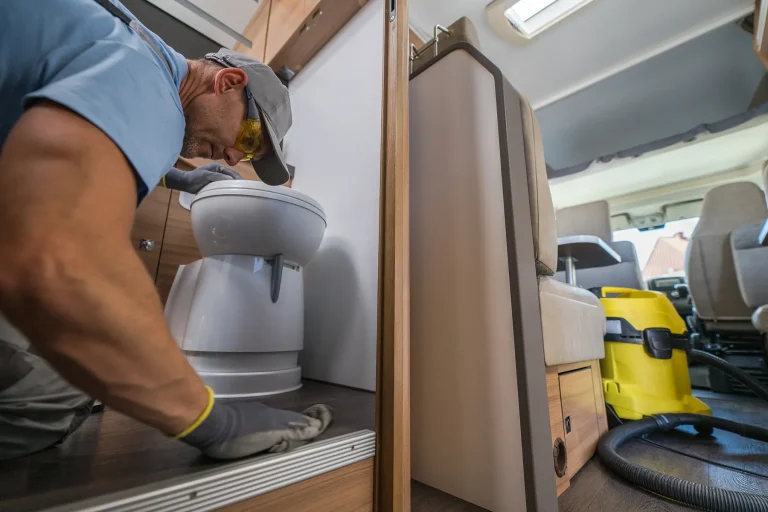
The RV toilet is one of the biggest question marks for new RV owners—and one of the most important systems to understand for long-term RV living. It looks simple, but it works very differently from a residential toilet, and using it incorrectly can lead to clogs, odors, and unpleasant surprises.
Whether you’re brand new to RV life or settling into a longer stay, knowing how your RV toilet works, how to use it properly, and how to maintain it can make daily living far more comfortable. When handled correctly, RV toilets are clean, efficient, and easy to manage. When ignored or misunderstood, they quickly become a source of stress.
This guide explains everything you need to know about RV toilets, from how they function to everyday best practices, maintenance tips, and what to expect during long-term stays.
How an RV Toilet Is Different From a Regular Toilet
At first glance, an RV toilet may resemble the one you have at home, but the similarities end there.
Unlike residential toilets that flush into a sewer system with unlimited water, RV toilets are designed to conserve water and send waste into a holding tank. Instead of a traditional siphon flush, RV toilets use a valve system that opens and closes, allowing waste to drop directly into the black water tank below.
Because of this design, RV toilets rely heavily on proper usage and adequate water flow to function smoothly. Treating an RV toilet like a household toilet is one of the most common mistakes new RVers make.
Understanding the RV Black Water Tank
The black water tank is where everything flushed from the RV toilet goes. It stores waste until the tank is emptied at a dump station or full-hookup site.
The tank is sealed, which helps control odors, but it also means waste doesn’t move or break down unless enough water is used. This is why water management is so important. Too little water can cause waste to pile up, leading to clogs or what many RVers call a “pyramid plug.”
When managed correctly, the black tank works quietly in the background. When mismanaged, it becomes very noticeable.
How to Properly Use an RV Toilet
Using an RV toilet properly is simple once you understand the basics.
Water is your friend. Before flushing, it’s important to add water to the bowl. This creates a layer that helps waste slide smoothly into the tank. After flushing, holding the valve open briefly allows enough water to enter the tank and prevent buildup.
Toilet paper choice also matters. Only RV-safe toilet paper should be used, as it breaks down more easily in holding tanks. Even with RV-safe paper, moderation is key. Using excessive amounts can cause problems over time.
One golden rule stands above all others: never flush anything that isn’t designed for RV toilets. This includes wipes, feminine products, paper towels, and even “flushable” wipes, which are not RV-friendly despite the name.
Odor Control: What Really Works
One of the biggest concerns RVers have about toilets is odor. The good news is that RV toilets don’t smell when used correctly.
Odors typically come from three sources: lack of water, poor tank maintenance, or dried-out seals. Keeping enough water in the bowl and tank helps block odors from rising. Tank treatments designed for RV use help break down waste and control smells, especially during warmer weather.
Regularly cleaning the toilet seal and ensuring it stays lubricated also makes a big difference. A dry or damaged seal allows odors to escape into the RV interior.
When these basics are followed, RV toilets remain surprisingly odor-free—even during long stays.
Emptying the RV Black Tank
Dumping the black tank is a normal part of RV living, but timing and technique matter.
The tank should be emptied when it’s at least two-thirds full. This ensures enough liquid volume to flush waste out effectively. Emptying too early can leave solids behind, while waiting too long risks overfilling.
During long-term stays at full-hookup RV parks, it’s tempting to leave the sewer hose connected and the valve open. This is a mistake. Keeping the valve closed allows liquids and solids to build up properly, preventing blockages. The valve should only be opened during dumping.
After emptying, adding water back into the tank helps prepare it for continued use.
RV Toilet Maintenance for Long-Term Living
Long-term RV stays require more consistent toilet maintenance, but it doesn’t have to be complicated.
Regular inspections of seals, valves, and hoses help catch small issues before they become big problems. Cleaning the toilet with RV-safe products prevents damage to seals and internal components.
Using tank treatments consistently, rather than only when odors appear, helps maintain a healthy system. Think of it as preventative care rather than a reaction.
For long-term RVers, developing a simple routine makes toilet maintenance feel automatic rather than stressful.
Common RV Toilet Problems and How to Avoid Them
Most RV toilet problems are preventable.
Clogs usually come from insufficient water or flushing the wrong items. Odors often result from dry seals or neglected tanks. Leaks can occur when seals wear out or connections loosen over time.
Avoiding these issues comes down to correct usage, regular maintenance, and not cutting corners. RV toilets are durable systems, but they expect you to work with their design—not against it.
RV Toilets and Long-Term RV Parks
Your RV toilet experience is also influenced by where you stay.
Long-term RV parks with full hookups make black tank management far easier. Reliable sewer connections allow you to dump on your schedule, maintain proper tank levels, and avoid rushed dump station visits.
That’s one reason many extended-stay RVers choose St. Louis Mulberry RV Gardens. Having consistent hookups and a calm environment makes daily RV systems—including toilets—much easier to manage.
When your setup is stable, toilet maintenance becomes just another simple routine rather than a constant concern.
Adjusting Expectations for RV Toilets
RV toilets require a mindset shift, especially for first-time RVers.
They are not fragile, but they are different. Once you understand how they work and respect their limits, they become reliable and easy to live with. Many RVers find that after a short adjustment period, RV toilets feel completely normal.
Long-term RV living often brings an appreciation for simpler systems that do their job efficiently without unnecessary complexity.
Final Thoughts: RV Toilets Are Easier Than You Think
The RV toilet doesn’t have to be intimidating. With proper use, enough water, and basic maintenance, it works cleanly and efficiently—even during extended stays.
Understanding how your RV toilet functions gives you confidence and removes one of the biggest mental barriers to comfortable RV living. Once that fear is gone, RV life becomes far more enjoyable.
Staying Long-Term and Want Fewer RV Headaches?
If you’re planning a long-term RV stay and want an environment that makes daily RV systems easier to manage, St. Louis Mulberry RV Gardens offers a calm, full-hookup setting designed for extended living.
When your location supports your lifestyle, even things like RV toilets feel simple and stress-free.
Explore extended-stay options at St. Louis Mulberry RV Gardens and enjoy RV living with fewer complications and more peace of mind.